Animal of the Day

The Hedgehog
A hedgehog can have up to 7,000 spines, and when it’s scared, every single one pops upright like a tiny natural defense system.
It’s cute, harmless-looking, and then suddenly it’s a medieval weapon.

Did You Know?

Elephants can recognize themselves in a mirror — one of the few animals with self‑awareness.
Foxes have whiskers on their legs to help them navigate in the dark.
Geckos can run across ceilings because their toes use microscopic hairs that create molecular stickiness.
How You Can Help

Small actions make a big difference:
- Reduce single‑use plastic to protect oceans
- Support local wildlife sanctuaries
- Adopt or sponsor an animal in need
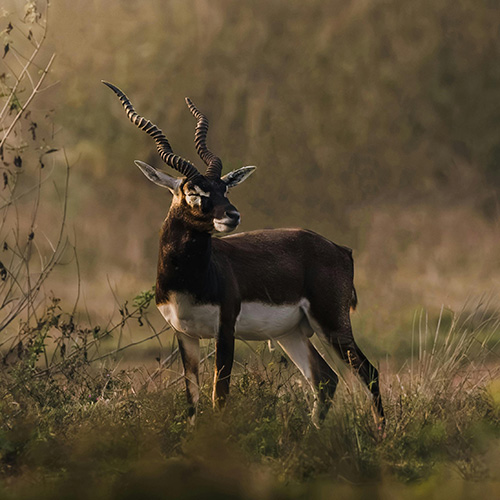
Gazelle
A gazelle is one of many antelope species in the genus Gazella /ɡəˈzɛlə/. There are also seven species included in two further genera; Eudorcas and Nanger, which were formerly considered subgenera of Gazella. A third former subgenus, Procapra, includes three living species of Asian gazelles.
Types: Thomson's, Rhim, Mountain, Dorcas, Arabian, Dama, Red, Grant's, Chinkara, Goitered, Saudi, Nanger
Gazelles are known as swift animals. Some can run at bursts as high as 100 km/h (60 mph) or run at a sustained speed of 50 km/h (30 mph). Gazelles are found mostly in the deserts, grasslands, and savannas of Africa, but they are also found in southwest and central Asia and the Indian subcontinent. They tend to live in herds, and eat fine, easily digestible plants and leaves.
Gazelle
Location: Africa, Asia, and India
Top Speed:50-60 mph
Thomson's Gazelle
Location: East Africa including Tanzania, Kenya, and South Sudan
Diet: short grasses, shrubs, seeds, roots
Rhim Gazelle
Location: Sahara Desert, primarily in Algeria, Tunisia, Libya, and Egypt
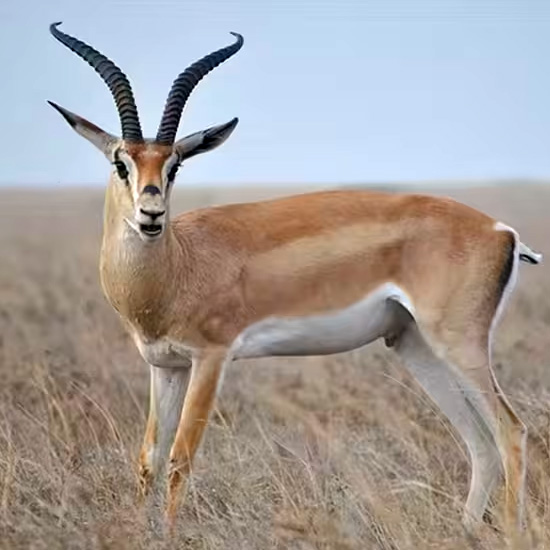
Mountain Gazelle
Location: Israel, the Levant
Info: Endangered, only roughly 5,000 remain
Grant's Gazelle
Location: East Africa
Info: They are well-adapted to arid regions, often surviving without standing water by foraging for succulent plants and shrubs.

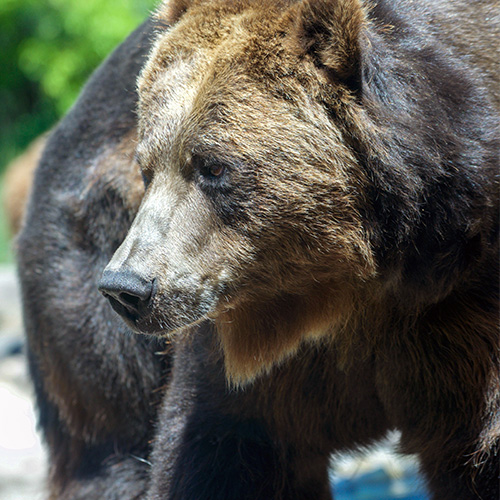
Bear
Bears are carnivoran mammals of the family Ursidae (/ˈɜːr.sɪ.diː, -.daɪ/). They are classified as caniforms, or doglike carnivorans. Although only eight species of bears are extant, they are widespread, appearing in a wide variety of habitats throughout most of the Northern Hemisphere and partially in the Southern Hemisphere. Bears are found on the continents of North America, South America, and Eurasia. Common characteristics of modern bears include large bodies with stocky legs, long snouts, small rounded ears, shaggy hair, plantigrade paws with five nonretractile claws, and short tails.
Types: Black, Brown, Grizzly, Polar, Panda, Koala
Grizzly Bear
Location: North America
Diet: elk, bison, fish, berries, roots, grasses
Brown Bear
Location: North America, Europe, and Asia.
Diet:
grasses, berries, nuts, fish, squirrels, mice, insects
Black Bear
Location: North America
Diet: plants, grasses, insects, nuts, seeds, berries
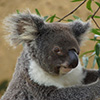
Koala Bear
Location: Australia
Diet: eucalyptus leaves
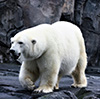
Polar Bear
Location: within the Arctic Circle in the United States, Canada, Russia, Greenland, and Norway
Diet:seals; whale and walrus carcasses

Panda Bear
Location: Central and Southwestern China
Diet: bamboo
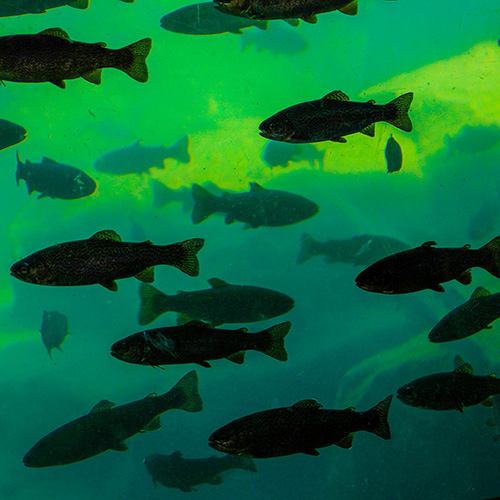
Fish
A fish is an aquatic, anamniotic, gill-bearing vertebrate animal with a tough cranium to protect the brain, but lacking limbs with digits. Fish can be grouped into the more basal jawless fish and the more common jawed fish, the latter including all living cartilaginous and bony fish, as well as the extinct placoderms and acanthodians. In a break from the long tradition of grouping all fish into a single class (Pisces), modern phylogenetics views fish as a paraphyletic group that includes all vertebrates except tetrapods. In English, the plural of "fish" is fish when referring to individuals and fishes when referring to species.
Types: Trout, Bass, Salmon, Minnow, Carp, Bluegill, Perch, Flounder, Cabazone, Goldfish, Koi
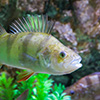
Perch
Species: Yellow, White, Silver
Info: Perch are a popular family of freshwater and saltwater fish
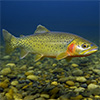
Trout
Species: Rainbow, Brown, Brook, Cutthroat, Tiger
Info: Diverse group of freshwater fish known for their streamlined bodies, large mouths, and preference for cool, clean water
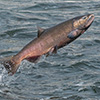
Salmon
Species: King/Chinook, Pink/Humpback, Sockeye/Red, Atlantic
Info: They are euryhaline (adaptable to varying salinity) and anadromous, born in freshwater streams, maturing in the ocean, and returning to freshwater to spawn.
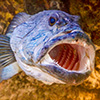
Bass
Species: Largemouth, Smallmouth, Striped, White, Spotted
Diet: Opportunistic feeders, eating minnows, crayfish, and insects.
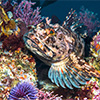
Cabezon
Info: The cabezon is a large species of sculpin native to the Pacific coast of North America.
Diet: crabs, abalone, octopus, squid, small fish.
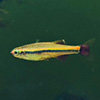
Minnow
Info: Minnow is the common name for a number of species of small freshwater fish, belonging to several genera of the family Cyprinidae and in particular the subfamily Leuciscinae.
Lifespan: 20 years
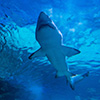
Shark
Species: Whale, Lanternshark, Great White, Hammerhead, Tiger, Bull.
Info: Despite their reputation as terrifying man-eaters, unprovoked shark attacks remain exceedingly rare.